
Everyone loves rare skills and new ideas. The truth is that they can be found anywhere if looked for properly. The real challenge is to find the one that fits best your organization’s needs. One of the best ways to fill the gap of your necessities, interests, or ideas is definitely outsourcing. Implemented correctly, outsourcing can – and should be – one of the key forms of strategic partnership, the one that will bring an innovative spirit to your organization and drive your product or service to new levels of efficiency.
The primary goal of outsourcing is cost reduction and shared risks. But, proper outsourcing is not as easy as just delegating duties to someone else. It requires a clear vision, a precise set of goals, and great preparation. If your setup is right from the start, outside minds will fit your objectives perfectly, and most often exceed your expectations.
Up’s and downs of outsourcing?
Benefits:
- Cost reduction
- Adaptability
- Efficiency
- Risk management
- Competitive edge
- Headhunting
Downsides:
- Lesser control
- Quality control
- Language barrier
- Time zone delays
- More dependencies
- Intercultural challenges
To accomplish all aspects of collaboration with a client, every company or organization needs to understand the principles of outsourcing engagement models.
What is an Engagement model?
Engagement model is the essence of collaboration between a company and the client, a framework that relies on their wants, needs, and interests, but also a framework that ensures all aspects of the agreement are guaranteed, for instance flexibility, responsibility, or levels of control.
By knowing the slightest detail of your cooperation (pricing, compatibility, delivery, timing, etc.), your company can choose the engagement model that can fulfill its requirements.
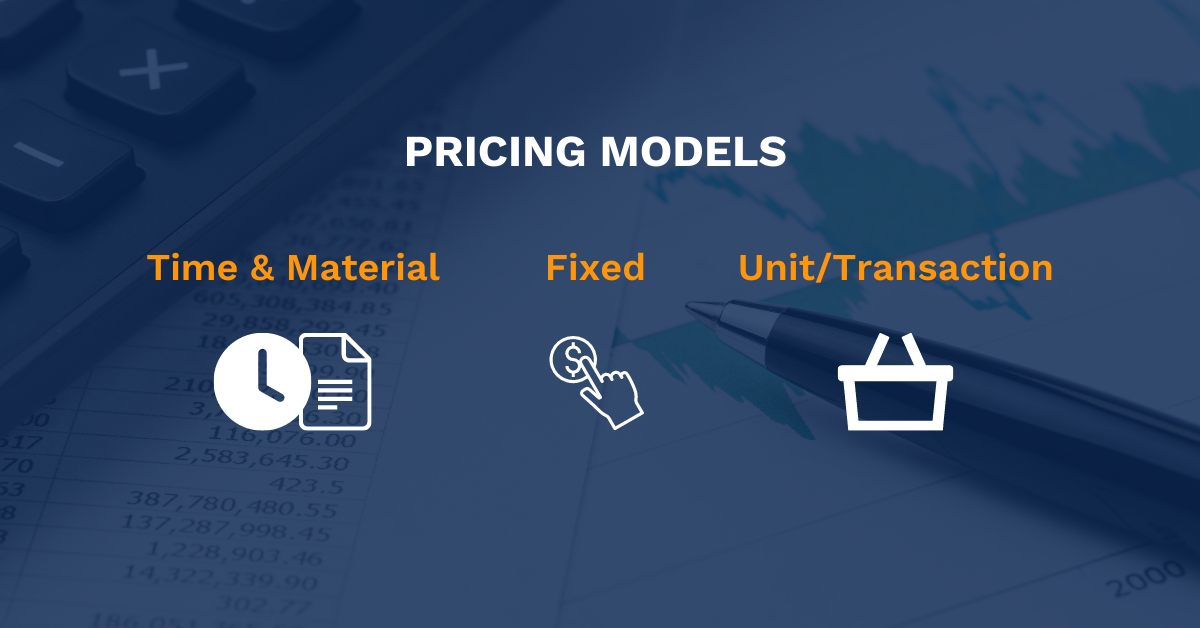
Typical pricing models for Outsourcing Engagements are:
- Time & Material pricing
- Fixed-price
- Unit/Transaction pricing
Engagement Models
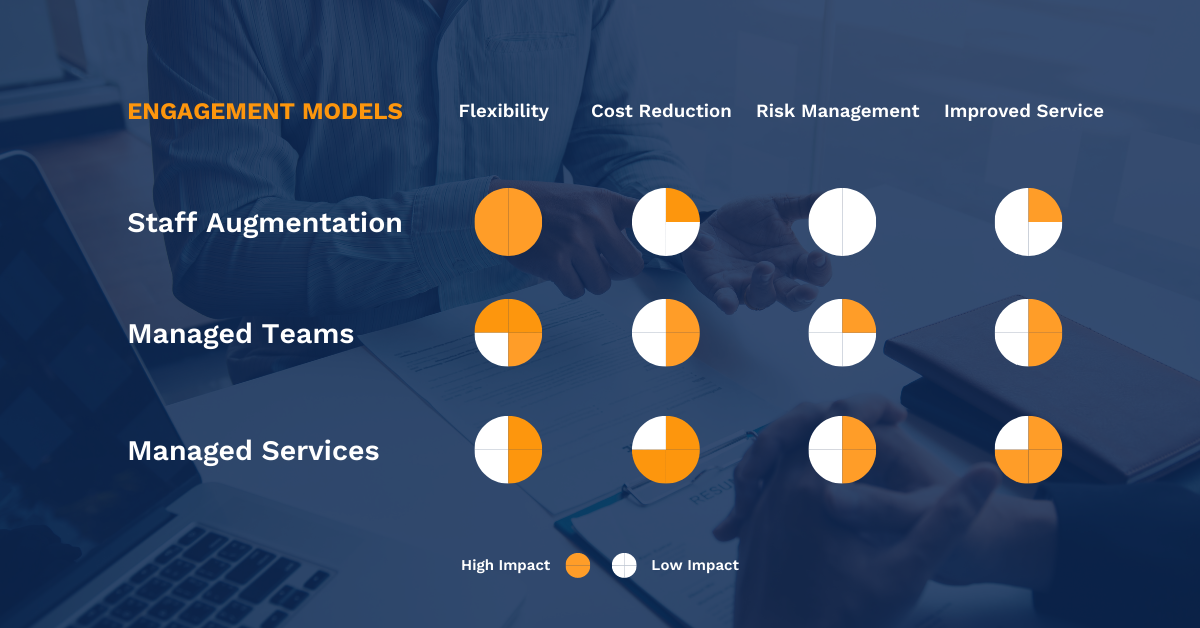
1. Staff Augmentation
The simplest version, the one that allows companies to add outsourced bestshore personnel to their existing in-house employees. It gives great flexibility, especially when there are uncertain requirements or processes that are critical for customer’s core service. It brings productivity or product improvement savings. Fully accountable for service quality and commercial risk. Mostly short- to mid-term oriented.
2. Managed Teams
It provides significant flexibility, but with certain capacity restrictions. It brings e.g. labor arbitrage savings, and slight productivity, but without process improvement savings. Ultimately accountable for service quality, but with slight modification regarding the supplier role. Mostly mid-to-long-term oriented.
3. Managed Services
Premium service area; reduced flexibility due to amortization, fixed cost base and contractual skill/knowledge retention. It brings labor arbitrage, productivity and process improvement benefits, with the supplier of the service fully accountable for its quality and the commercial failure. Mostly long-term oriented.
Engagement model Transformation?
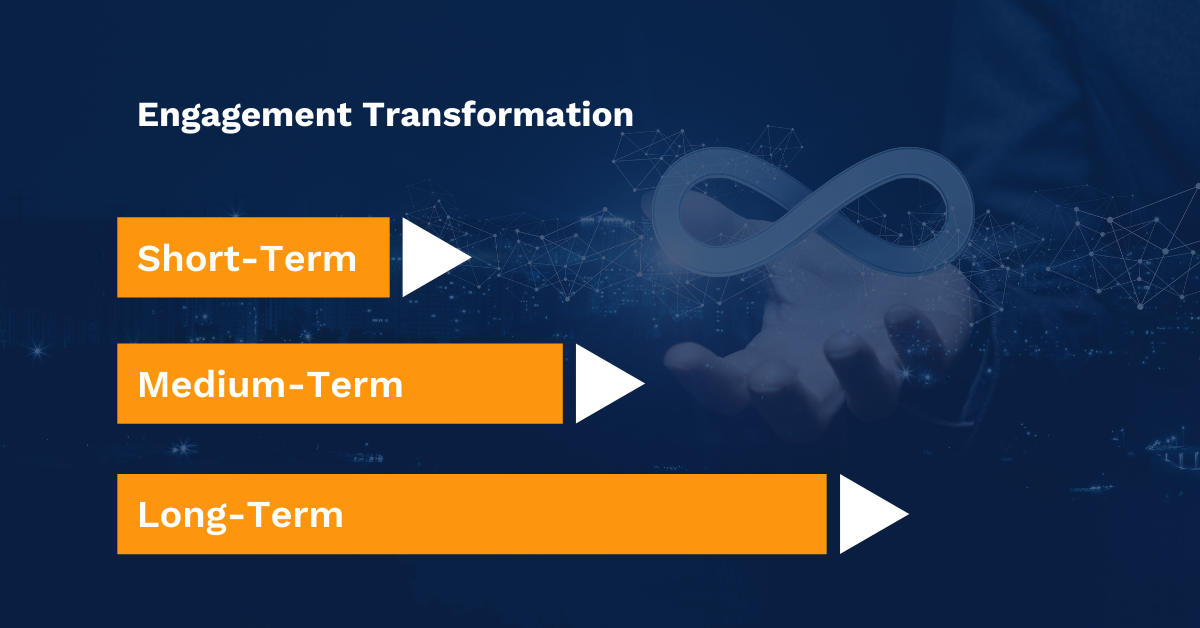
1. Short-Term Transformation
Most common in the software engineering world. It includes e.g. transformation of waterfall-driven development service contracts into Work & Labor oriented agile service contract models, or just the transformation from fixed-price engagement time & material contracts, where an organization needs to specify its requirements to suit mature outsourcing engagements. SLA’s, OLA’s, KPI’s, flexibility requirements, Deliverables, bonus-malus regulations, target operating models, etc.
In order to achieve better commercial and/or delivery results, each organization should think about tender processes and initiate Request for Proposal document preparation activities with its challengers and preferred partners.
2. Medium-Term Transformation
Based on knowledge, experience and the organization from the outsourcing partner, these transformation brings primarily three types of outsourcing gains
- productivity/efficiency gain (e.g. process re-engineering, economies of scale)
- technology gain (e.g. digitalization)
- sourcing gain (e.g. labor arbitrage)
In order to achieve better commercial and/or delivery results, and in order for the outsourcing partner to fully understand related reporting requirements, each organization should thoroughly describe the understanding of these continuous service improvements and contract these terms properly in the related outsourcing agreements. In addition, outline related benchmarking regulations with a related price adjustment mechanism. Finally, disclose your business development plans to your partners. By underlying sales inactivation plans, motivate them to support your market development activities.
3. Long-Term Transformation
The outlook and limitations of your outsourcing vision should be clear and precise, and in that manner presented to your current and envisioned outsourcing partners. By defining your envisioned Target Operation models (TOM) for e.g. 24/60/120-month scenarios, make your partners develop related Transition plans that perfectly correlate to these scenarios; furthermore, they will be able to challenge and optimize your TOM with their outside-in view. Finally, it’s a win-win situation.
Good communication is also key, that is why you should ask your outsourcing partner to outline quick wins not only at the beginning. A winning overview of how they will achieve their improvements “on their” risk over the contractual lifecycle should be shown. All supported by an underlying performance indicators framework.
Mind not to forget the exit – and extension regulations, the handover assistance, step-in rights, and of course the low- or non-performance liability terms. Just ways they would cover the risk and how would they unconditionally invest in the process of transformation.
Conclusion
Establishing effective outsourcing input turned out to be vital for every business that strives to innovation. To find out which outsourcing model of engagement suits your project 100%, try discussing your requirements with local outsourcing experts, such as Titan Advisory.
Want to know which Engagement model is right for your organization?
Give us a call, we’d love to hear from you!


